.jpg)
Middleton Singapore
Middleton International School is a vibrant learning community in Singapore, offering high-quality international education at an accessible fee. Rooted in the values of diversity, inquiry, and innovation, Middleton nurtures globally minded learners through a balanced and engaging curriculum. With a strong emphasis on academic excellence, character development, and real-world learning experiences, the school empowers students to thrive in an ever-evolving world.
Share This Article
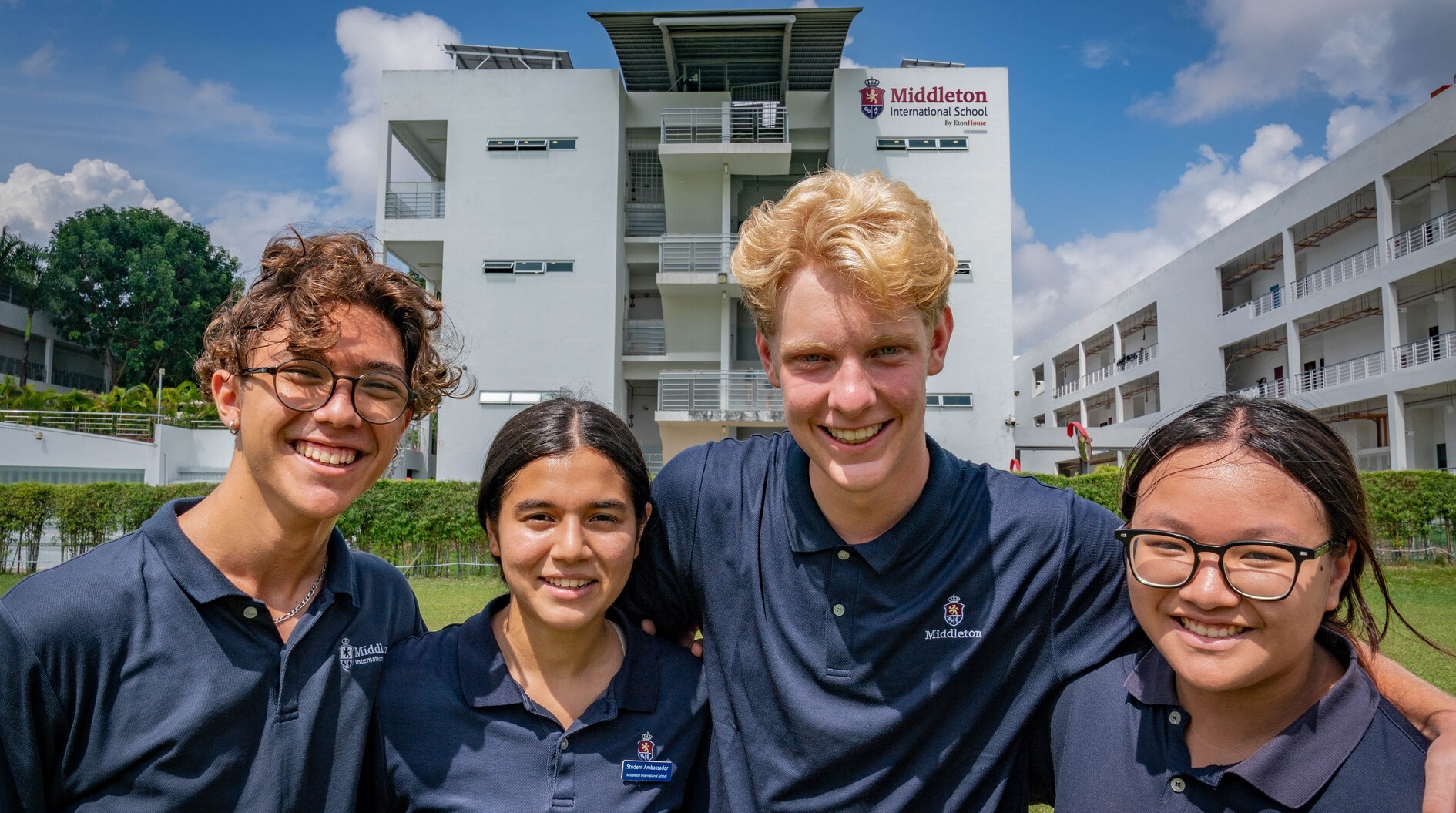
Walk through the corridors of Middleton International School on any given day and you will hear something special: a vibrant community of students representing more than 50 nationalities finding ways to connect, laugh, learn and express themselves across languages. This is more than background conversation. It is, in many ways, the heart of what we do here.
This diversity does more than make Middleton a multilingual school. It creates an environment in which children can become plurilingual learners who draw on their languages, experiences and cultural knowledge to understand the world and communicate with others.
In this article, Neelam Rawat, Languages Coordinator at Middleton International School, shares her insights into plurilingualism and how recognising each child’s linguistic repertoire can enrich learning, strengthen identity and foster a deeper sense of belonging.
At Middleton, we believe that every language a child carries into our school is an asset, not an obstacle to overcome, not a gap to close, but a genuine strength to be celebrated and built upon. This belief is central to our approach to language learning and is reflected in the concept of plurilingualism.
What is plurilingualism, and why does it matter to your child?
Multilingualism describes an environment in which multiple languages are spoken. Plurilingualism focuses on how an individual uses the languages they know.
Plurilingualism recognises that learners do not keep their languages in separate compartments. Instead, they draw on their full linguistic repertoire, including their home languages, the language of instruction and other languages they are learning, to develop understanding, communicate and connect with others.
“A child who moves between languages is not confused. They are demonstrating one of the most sophisticated cognitive skills a human being can develop.” — Miss Neelam Rawat
In a school community representing more than 50 nationalities, this is part of the everyday reality of our classrooms and something we seek to nurture.
How We Support Plurilingualism at Middleton
Our language programme is built on a simple but powerful conviction: that a child's mother tongue is the foundation on which all other learning is built. When we honour the home language, we honour the whole child.
Mother Tongue and Home Language Support.jpeg?width=500&height=375&name=IMG_0006%20(1).jpeg)
We actively encourage students to draw on their home languages in the classroom, not only during dedicated language lessons, but also where appropriate across different subjects. When a child can connect a new concept to a word or idea from their own language and culture, understanding deepens. We design our learning experiences to make space for these connections, so no child ever has to feel that who they are at home is separate from who they are at school.
This approach changes the classroom in ways that are visible and meaningful. Students begin to see language not as a barrier but as a bridge between subjects, between peers, and between their own identity and the wider world. A student explaining a mathematical concept in one language and then reaching for a more precise expression in another is not struggling. They are using their linguistic knowledge purposefully to support learning.
What This Looks Like in Practice
Our educators are trained to welcome and work with linguistic diversity, not to manage it, but to draw from it. In a Middleton classroom, you might see a group of students collaborating on a project, instinctively moving between languages as they work. You might hear an educator invite a student to explain their thinking in their home language first before moving to the language of instruction. You might notice a classroom display that features words and phrases from the languages spoken by the children in that very room.
.jpeg?width=500&height=333&name=DSC05580-min%20(1).jpeg)
Beyond lessons, cultural celebrations and multilingual storytelling sessions can offer joyful, authentic opportunities for students to experience language as part of identity and community. These moments remind every child that their language belongs here, in this school, in this community.
“When a child sees their language on the classroom wall, hears it celebrated in an assembly, and uses it to help a classmate understand, something fundamental changes. Language becomes belonging.” — Miss Neelam Rawat
Connecting Language with Cultural Immersion
Language and culture are closely connected. Through language, children encounter different traditions, stories, values and ways of seeing the world. When they experience language within its cultural context, it becomes more than a set of words to learn. It becomes a way to understand and connect with others.
Middleton's diverse community gives our students the opportunity to experience this connection through the school year. They learn alongside peers from different backgrounds, hear different languages being spoken and gain insights into cultures through the lived experiences of classmates, families and educators.
This cultural immersion encourages our students to approach unfamiliar languages and traditions with openness and curiosity. It also helps them recognise connections across cultures while developing pride in their own identities.
Celebrating Our Interconnected Community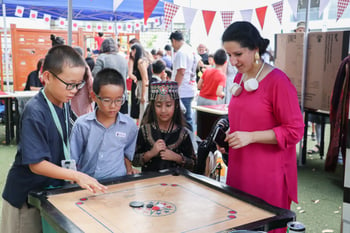
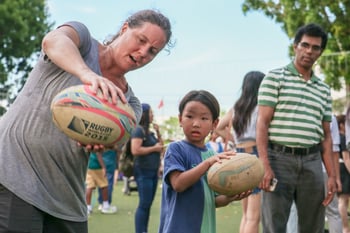
Middleton Day brings this spirit of cultural immersion to life. Our campus comes alive with colourful booths and lively performances led by parent volunteers, educators and students. In just one evening, students and families journey across cultures, discovering traditions, stories and experiences from around the world.
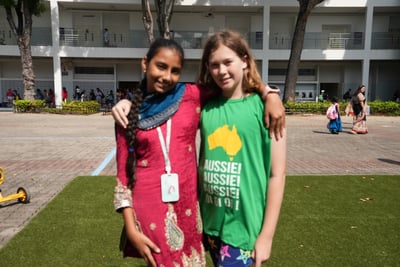
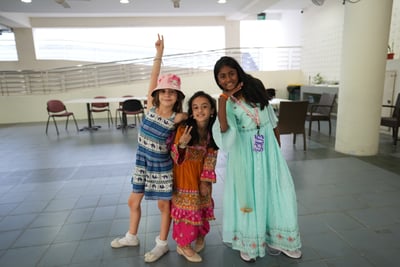
International Day provides another meaningful opportunity to celebrate the diversity within our community. Students wear cultural attire and learn about the importance of appreciating and understanding different cultures.
These celebrations are not separate from plurilingual learning. They create meaningful contexts in which students can encounter different languages, ask questions, exchange stories and understand how language reflects culture and identity.
This is the spirit of openness and connection that shapes the Middleton experience, where diversity is not only celebrated on special occasions, but lived every day.
What This Means for Your Child
As a parent, you may sometimes wonder whether your child's multilingualism is an advantage or a complication, whether maintaining the home language might somehow slow down their English, or whether mixing languages is a sign that something needs correcting.
Using or mixing languages is not, by itself, a cause for concern. Research suggests that continued support for a child’s home language can contribute positively to learning, communication and identity. It is also important to consider each child’s individual learning and language development needs.
At Middleton, we want children to communicate with confidence while feeling proud of their linguistic and cultural identities. Through language, they learn not only to express themselves, but also to connect, participate and belong in an increasingly interconnected world.
Plurilingualism is not treated as something separate from learning. It is part of how children make meaning, build confidence and connect with the people and ideas around them. By valuing each child’s home language alongside the language of instruction, we help learners feel seen, supported and ready to participate fully in a diverse international school community.
For families, this means your child’s language journey is recognised as part of who they are, and as a strength that can support their learning, friendships and sense of belonging.
Find out how Middleton's multilingual environment helps every child thrive.
